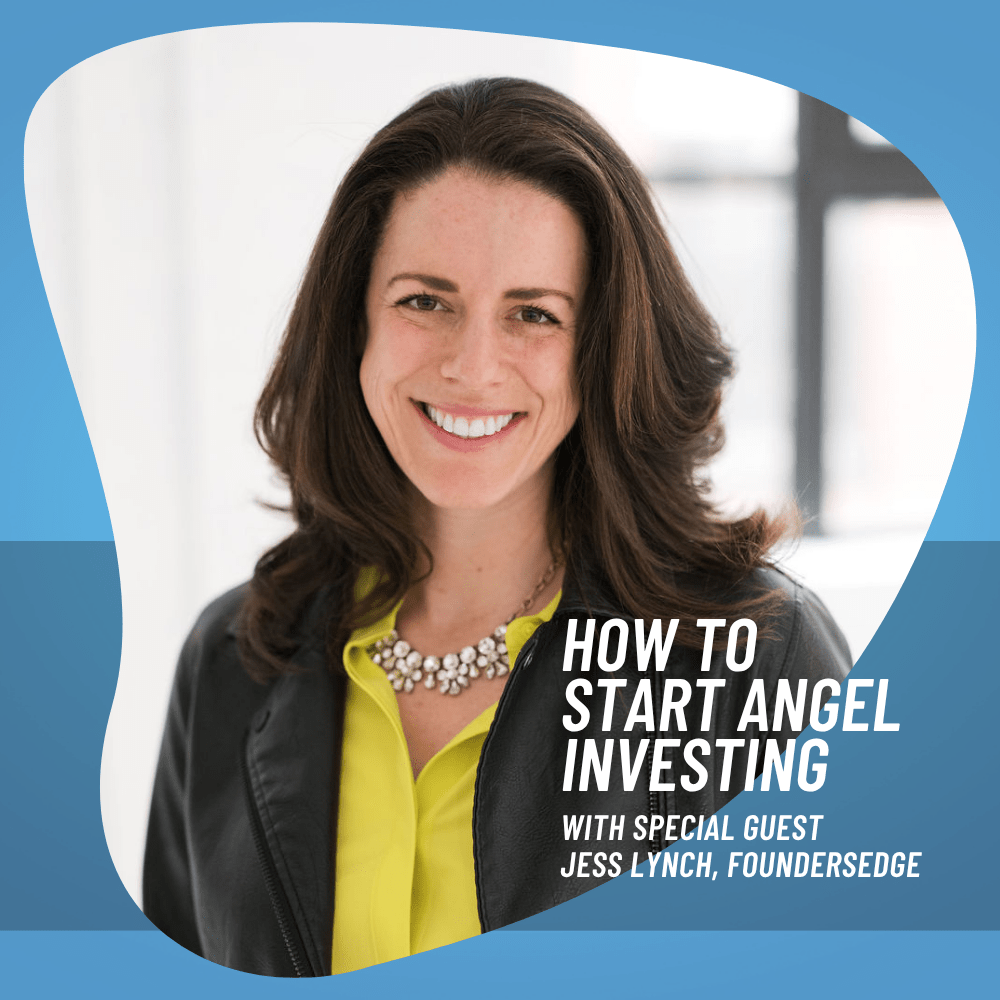
How do you start angel investing? Can anyone be an angel investor or is this a world reserved for Silicon Valley insiders and Shark Tank-esque business tycoons?
Jess Lynch joins us to explain how $2,500 can be your entry ticket into the world of angel investing – and how to deploy those dollars wisely in a high-risk environment. Join us to get the exact frameworks Jess uses to find, vet, and back the founders most likely to win.
In this episode, Eric asks Jess to pull back the curtain on the private markets and how average investors can start exploring opportunities within them. They give clear guidelines that anyone can use to guide decision-making, from how to size your allocation (4–7% of net worth), to why you should plan for at least 20 investments to manage risk, to what Jess calls her “founder index”: 60 standardized questions designed to reduce bias and surface the founders most likely to deliver outsized returns.
They also tackle one of the most common and emotionally charged situations investors face: what do you do when a friend or family member asks you to back their company?
Beyond the mechanics, this episode dives into something rarely discussed in personal finance circles: the societal power of angel investing. Less than 2% of venture capital goes to women-led teams — and the conversation around who gets to make those early funding decisions matters deeply for what ends up getting built.
Whether you’ve been angel investing curious for years or you’re hearing this concept seriously for the first time, this episode gives you the map, the math, and the mindset to decide if this asset class belongs in your financial life.
Jess Lynch is a forensic accountant turned founder turned investor. Jess recently co-founded a pre-seed VC fund, FoundersEdge, that invests in multi-time founders using AI to transform user experiences, and has built a large network of experienced entrepreneurs to support these new ventures, doing everything she can to help them succeed.
You can connect with Jess on LinkedIn at https://www.linkedin.com/in/jessicallynch. Learn more about FoundersEdge at https://www.foundersedge.com.
KEY TAKEAWAYS
Angel investing is more accessible than you think.
Through angel groups and syndicates, minimum check sizes can start as low as $2,500. Attend local startup pitch events, connect with founders and investors already in your LinkedIn network, or explore national angel groups like Hustle Fund Angels, Portfolia, and Gangels to start building your deal flow and education simultaneously.
Use the 4–7% rule for sizing your allocation.
Angel investing should only represent 4–7% of your net worth… and even then, that percentage should only represent dollars you can actually afford to lose entirely without disrupting your financial plan.
Diversification isn’t optional. It’s a requirement in a high-risk space.
Jess recommends a minimum of 20 investments to create a meaningful chance at returns. Divide your total allocation by 25–30 to leave room for follow-on checks to your top performers.
Technical founders outperform MBAs by 2.5x.
Jess’s research on LinkedIn profile data found that founders with a computer science or deep technical background are approximately 2.5 times more likely to succeed at building tech companies than those without. She’s also created a founder index to reduce bias in deal evaluation. By asking every founder the same 60 standardized questions, Jess’s team has built a repeatable, less biased system for identifying founders with the highest probability of success.
Use the “gift framework” for friend and family investment decisions.
Before backing someone you know personally, ask: “If this person were in a hard spot and needed money, what would I freely give them?” That will help you make a clearer decision versus getting distracted by any pitches or investment numbers.
Non-financial returns are real and significant.
Angel investing plugs you into a network of builders, entrepreneurs, and innovators. This offers intangible benefits including learning, fulfillment, and visibility into emerging industries that most professionals simply don’t have access to.
AI-forward founders are outpacing the competition.
Jess’s fund now actively evaluates whether founding teams are using AI tools like Claude Code to drive operational efficiency. They treat the absence of this as a red flag.
HOW TO START ANGEL INVESTING FAQs
Q: What exactly is angel investing, and how is it different from venture capital?
A: Angel investing means deploying your own personal capital into early-stage private companies in exchange for equity. Venture capital, by contrast, involves raising money from outside investors (individuals, institutions, family offices) and deploying that pooled capital on their behalf — while also putting in some of your own. This episode covers both models in depth, including how Jess transitioned from angel investor to VC fund co-manager.
Q: How much money do I need to start angel investing?
A: Less than most people assume. Through angel groups and special purpose vehicles (SPVs), minimum check sizes can be as low as $2,500. If investing directly into companies, founders typically require $10,000–$25,000 minimums, but syndicating through an angel group allows you to pool resources with others and participate at a lower threshold.
Q: What percentage of my net worth should I allocate to angel investing?
A: Jess recommends keeping private market investments like angel deals to 4–7% of your total net worth. This asset class is high-risk, high-reward. Any money you deploy here should only consist of capital you can genuinely afford to lose entirely without affecting your financial security, retirement plans, or major life goals.
Q: How many angel investments should I make, and why?
A: Jess’s rule of thumb is a minimum of 20 investments to achieve meaningful diversification in this asset class. Because many early-stage companies will fail, the strategy depends on a few big winners offsetting the losses. She also recommends reserving funds for follow-on investment in your top 25% of performers, which means effectively dividing your total budget by 25–30, not 20.
Q: What does Jess look for in a founder before investing?
A: Three primary traits:
- Deep technical background (computer science or relevant domain expertise — her research found this predicts success 2.5x better than an MBA alone)
- Meaningful industry experience (enough to reach early customers without cold calls)
- Prior startup experience
Q: What should I do if a friend or family member asks me to invest in their company?
A: Jess offers a powerful reframe: ask yourself what you’d freely give that person if they came to you in financial need. That’s the number that makes sense as an investment. This “gift framework” keeps the relationship intact regardless of outcome and removes the pressure of expecting a return.
Q: What are the non-financial benefits of angel investing?
A: Angel investing connects you with a dense network of entrepreneurs, investors, and innovators. It exposes you to emerging industries and technologies before the general public. And it provides a sense of fulfillment; the experience of giving an early “yes” to someone else’s vision, the same way early investors once did for founders like Jess.
Q: How do I find my first angel investment opportunity?
A: Three practical paths from Jess:
- Search for and attend startup pitch events in your city
- Scroll your LinkedIn network for founders and existing angel investors and reach out for coffee
- Join a structured angel group like Hustle Fund Angels, Portfolia, or Gangels, which provide education, curated deal flow, and lower minimum check sizes
Q: Is AI changing how early-stage companies are evaluated?
A: Yes. Jess’s fund now expects founding teams to be using AI tools to drive efficiency, including tools like Claude Code for software development and operational tasks. Companies that aren’t leveraging available AI tooling are viewed as being at a competitive disadvantage, and this has become a meaningful signal in her fund’s due diligence process.
Q: What’s the single biggest misconception about angel investing?
A: That it requires enormous wealth. The minimum entry point through syndicated angel groups is $2,500 and a diversified portfolio of 20 investments could theoretically be assembled for $50,000. The real barrier isn’t major wealth; it’s awareness that this world exists and knowledge of how to enter it responsibly.
Ready to create, use, and enjoy money for life? Request a complimentary consultation with us at BYH and discover how to optimize your investments, reduce your tax burden, and grow your wealth: https://beyondyourhammock.com/schedule